Not all freight rate management systems are built the same way. The category includes everything from lightweight quoting tools to full automation platforms, and the differences matter when a brokerage is quoting hundreds of loads per day across dozens of shipper connections. Choosing the wrong system doesn’t just mean paying for something that underdelivers. It means spending the next several months working around limitations that slow the operation down.
These are the criteria that distinguish a rate management system built for scale from one that creates new bottlenecks.
1. Real Integration Depth, Not Just Integration Count
The first thing to look past is the integration list. Most RMS platforms will tell you they connect to a long list of shipper platforms. The more useful question is how those connections work. There are three types of shipper platform connections:
Live API connections: The RMS communicates directly with the shipper’s system in real time. Rate requests are received and quotes are submitted without delay or manual steps.
RPA connections: Robotic process automation mimics the actions a human would take in a shipper portal. Used for platforms that don’t offer a direct API. Still real-time, still automatic.
Scheduled or manual exports: The RMS pulls data on a schedule, or requires manual downloads and uploads. This creates a lag between when the request is submitted and when the RMS sees it.
The first two types support a competitive response time. The third doesn’t. Ask directly how each integration is handled and what the expected response window is per shipper platform. Tabi Connect uses API connections where available and RPA where not.
2. Pricing Logic That the Broker Controls
The value of a rate management system depends on how precisely a broker can define and enforce their pricing strategy. A system that locks logic behind vendor-controlled rules or requires IT involvement to update is a tool that constrains the brokerage’s strategy rather than serving it.
Look for no-code configuration for markup targets, lane adjustments, accessorials, and equipment rules; real-time parameter updates from any browser, without an implementation ticket; support for 40+ simultaneous parameters so the logic can be as granular as the business requires; and exception thresholds that can be set and adjusted by the operations team, not the vendor.
The pricing logic engine is where markup, and ultimately margin, is protected or lost. A brokerage that can’t quickly adjust rules as market conditions change will find itself either leaving money on the table or quoting outside competitive ranges. See how broker-defined pricing logic protects margin.
3. Exception Handling That Is Visible and Actionable
Every RMS will encounter rate requests that fall outside the defined parameters. How the system handles those exceptions determines whether they become missed loads or managed escalations.
A well-built system flags exceptions, routes them to the right team or rep, and captures the exception data so patterns can be identified and addressed. A poorly built system lets them fall into a queue that nobody monitors, or requires manual checking to find requests that didn’t receive a response.
Ask what percentage of exceptions typically get resolved, how exceptions are routed, and what reporting exists around exception patterns. A high exception rate that doesn’t decrease over time is a signal that the pricing logic needs refinement, and the right system makes that visible.
4. Analytics That Cover the Full Quoting Funnel
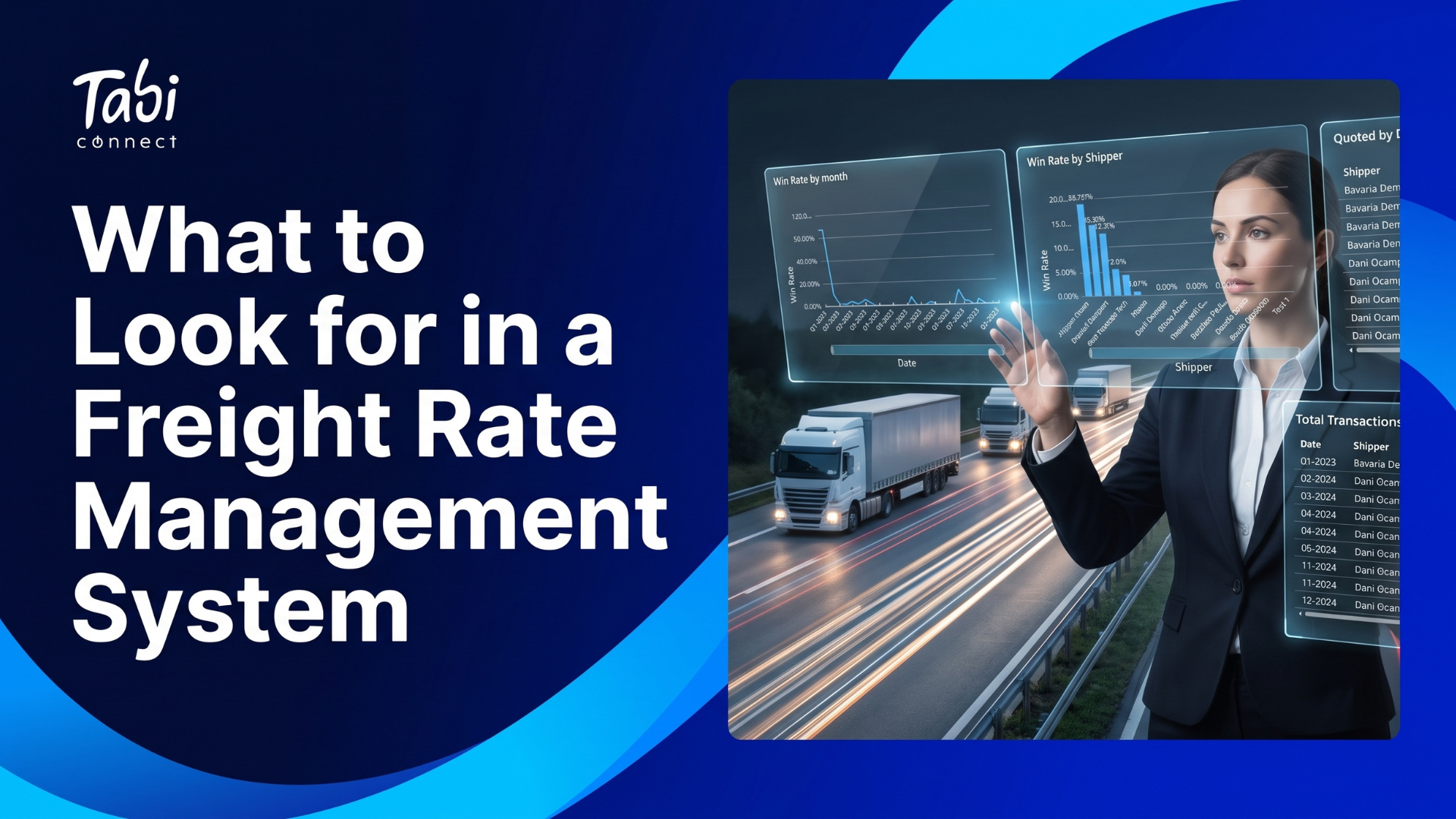
Most quoting operations track loads won and loads moved. The stronger signal is what happens before the award: how many requests came in, how many were quoted, how many weren’t, at what markup, and at what response time.
A freight rate management system should capture every rate request, not just the ones that turned into quotes. That complete data set is what makes it possible to answer the questions that actually drive improvement: Which lanes are we consistently losing? Where is our response time causing us to miss the first wave? Which shippers are sending requests we never respond to?
5. Implementation Time and IT Requirements
An RMS that takes six months to implement and requires significant IT involvement isn’t the right tool for a brokerage that needs to solve a quoting problem now. Implementation complexity is a real evaluation criterion, not just a logistics detail.
Questions to ask: Who handles the API and RPA configuration? Are virtual machines or custom infrastructure required from the customer? How many weeks from contract to go-live is realistic?
Tabi Connect averages four to five weeks from proposal acceptance to go-live. The implementation team handles all integrations and configuration. The customer’s IT team is not required to provision or maintain infrastructure.
6. A Pilot or Trial Option Before Full Commitment
A rate management system is a significant operational change. Any vendor confident in their platform should offer a defined way to test it before full deployment. A pilot with a subset of shippers, a defined time window, and measurable results is how a brokerage confirms that the system does what it claims before expanding to full volume.
Tabi Connect offers 30-day pilot programs with no long-term contract requirement. This lets brokerages evaluate response time, win rate impact, and exception handling with real shippers before committing.
What to Look for at a Glance
| Criterion | What to Ask |
| Integration depth | API or RPA? Scheduled exports? Expected response time per shipper? |
| Pricing logic control | No-code updates? How many parameters? Real-time adjustments? |
| Exception handling | How are exceptions routed? What exception data is captured? |
| Analytics coverage | Does the system capture requests that were not quoted? |
| Implementation | Who handles configuration? Time to go-live? IT involvement required? |
| Pilot options | Is a trial available before full commitment? |
Frequently Asked Questions About Evaluating a Freight Rate Management System
What is the most important factor when choosing a freight rate management system? Integration depth matters more than integration count. A system with 100 listed connections that relies on scheduled exports is slower than one with 30 live API or RPA connections. Response time is where loads are won or lost, so the technology behind each integration is the most critical factor.
How long does RMS implementation typically take? It varies by vendor and scope. Tabi Connect averages four to five weeks from proposal acceptance to go-live. Setup requires no virtual machines or infrastructure from the customer. All API connections and configurations are handled by the implementation team.
Is a rate management system worth the investment for smaller brokerages? An RMS delivers the most immediate return for brokerages quoting 50 or more spot loads per week across multiple shipper platforms. For smaller operations, the question is whether manual quoting is creating a ceiling on growth. If the team can’t respond quickly enough to compete, the cost of the RMS is typically offset by the loads that would otherwise be missed.
What should I test during a pilot? Focus on three things: response time per shipper, win rate against your baseline, and exception rate. A pilot that shows faster response, stable or improved win rates, and manageable exceptions is a clear signal the system is working.
How do I evaluate the quoting analytics? Ask to see a live demo of the analytics dashboard and look specifically for data on requests that weren’t quoted. Any platform can show you loads won. The stronger indicator is whether the system captures the full quoting funnel, including the requests that went unanswered.
See Tabi Connect’s Approach to Each of These Criteria
Tabi Connect is a freight rate management system built for brokerages that need to quote at scale. It connects to 70+ shipper platforms, enforces broker-defined pricing logic with no coding required, and includes a 30-day pilot program.
Speak with a Rate Tech Expert now!