Quick definition
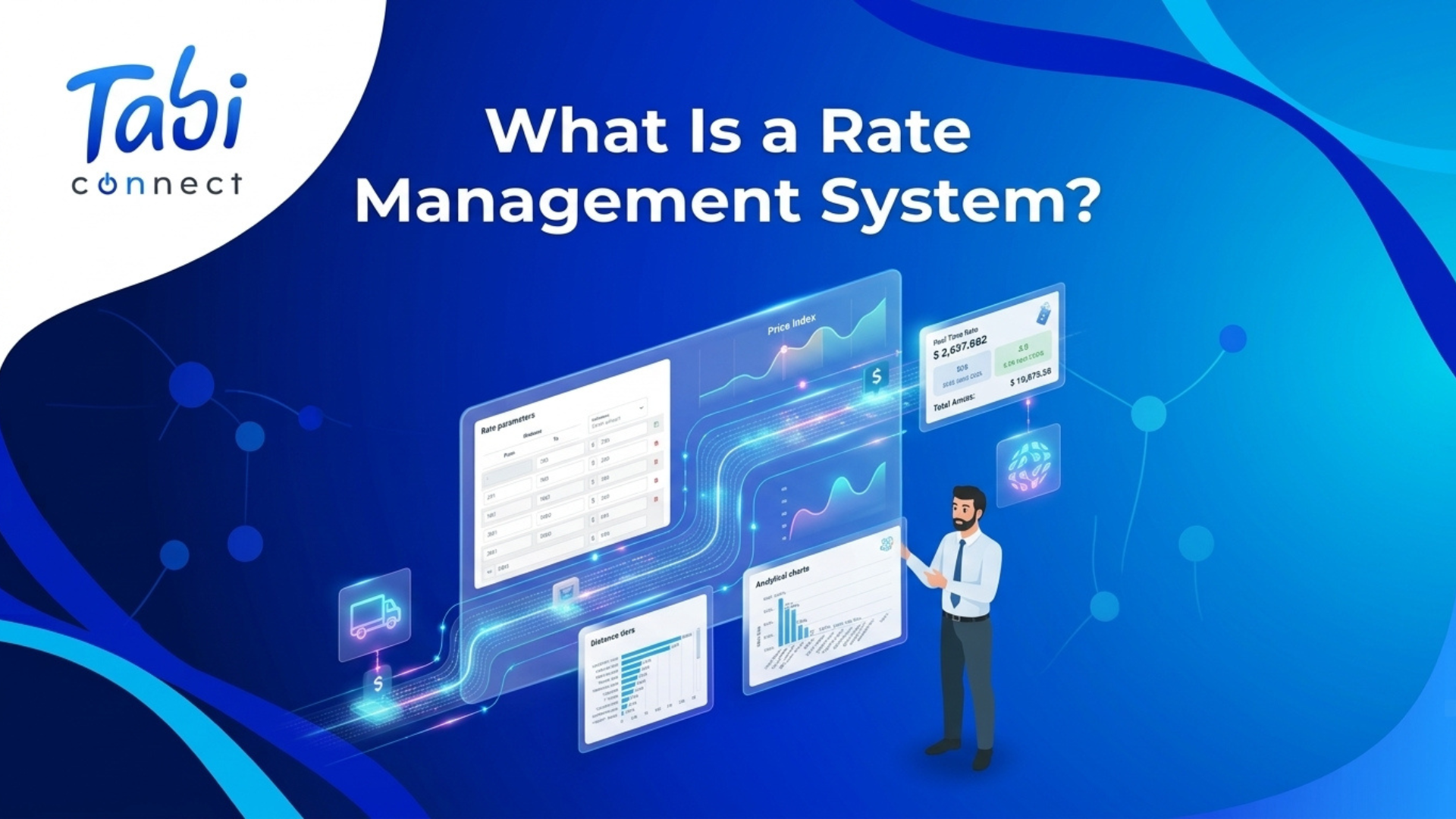
A Rate Management System (RMS) is software that automates freight quoting and turns every request into pricing data brokers can act on. It captures rate requests from shipper platforms, bid boards, and email, prices each one using rules the broker defines, and submits the quote back to the shipper, in some cases in as little as two seconds, without a rep manually handling the request. Every request is captured in full, whether it turns into a submitted quote, gets routed for manual review, or falls outside what the broker wants to quote at all. When a load is awarded, that outcome is tracked against the original quote too, so brokers can see quoted markup next to what was actually awarded. The result is a complete record of what got quoted, what got skipped, and what won, instead of a summary limited to the loads that closed.
Freight brokers use the term in a few different ways, so it helps to be precise. An RMS is not a rate lookup tool, and it is not a transportation management system. It is the layer that sits between the two, turning a rate request into a submitted quote without a person doing the mechanical steps by hand.
The rest of this page covers what an RMS actually does, why it exists as a separate system from a TMS, how brokerages use quoting data as a pricing strategy instead of a reporting exercise, and what to look for if you are evaluating one.
What a Rate Management System Does
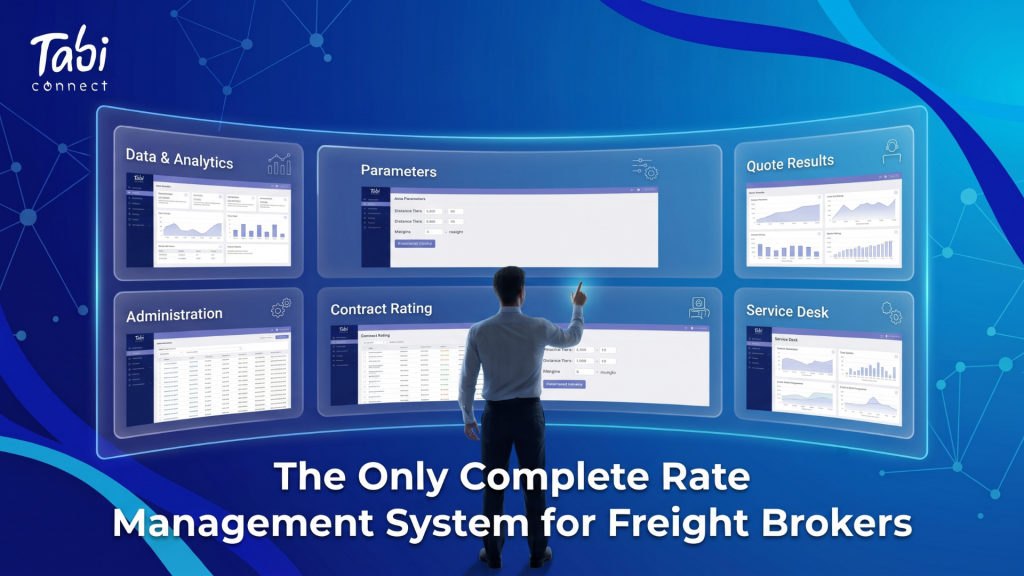
An RMS is built around five core functions. Together they cover the full quoting cycle from the moment a request arrives to the moment a win or loss is recorded.
Multi channel request capture
Connects to shipper TMS platforms, bid boards, and email using API where available and RPA where it is not, so requests from every channel land in one place.
Configurable pricing logic
Markup rules, lane specific adjustments, and customer tiers are set through a browser interface and applied the same way on every quote, with no coding involved. Pricing logic doesn’t have to be built as traditional if/then statements either. AI pricing rules let brokers set quoting logic in plain language, and those rules stack on top of the rest of the pricing setup instead of replacing it. That means a broker can adapt to a quick change in a lane without having to go in and manage how each individual rule operates.
Automated quote submission
Quotes go back to the shipper directly, without a rep in the loop for requests that fall within the defined pricing rules.
Control Tower and exception routing
Not every request should go out automatically, and Control Tower is where a broker decides that. It routes quotes to a human review queue whenever a broker wants a person in the loop, whether that’s a specific shipper, a complex lane, or any request that falls outside the defined pricing parameters. It’s optional and configurable per lane or account, so brokers can let the rules run on what they trust and keep manual review on the parts of the book where they still want a person checking the quote before it goes out.
Quoting analytics
Every request is logged whether it resulted in a quote or not, giving operations a complete view of response rate, win rate, and quoted markup by lane. Instead of building a report to find out why win rate dropped on a lane, operations can ask the system directly and get an answer from the underlying quoting data, without pulling it manually.
Why an RMS Is a Separate System From a TMS
The short answer is that a TMS and an RMS are built to solve different problems, not the same problem at different price points.
A TMS is architected around the lifecycle of a load that already exists. Once a load is awarded, it moves through tendering, tracking, documentation, and invoicing, each stage anchored to a single record. That’s a sequential, one-record-at-a-time workflow, and TMS platforms are built well for it.
Quoting is a different kind of problem. A brokerage fielding requests across shipper platforms, bid boards, and email is handling high volume, sub-second response expectations, and parallel requests where most never turn into a load at all. That’s not a lifecycle problem, it’s a throughput problem. Building real automation for that means the system has to be architected for volume and speed from the start, not added as a module on top of software designed to manage one load through its stages.
That’s why most TMS quoting modules stay at basic rate lookup. It’s not a feature gap that will close with the next release, it’s a mismatch between what the system was built to do and what quoting actually requires. A rate management system is purpose-built for the quoting side, and it connects to the TMS once a quote is awarded and becomes a load.
Pricing Data as a Strategic Asset, Not Just a Report
Most brokerages still price off rep memory and experience. A rep knows a lane, has a feel for what it’s trading at, and quotes off that instinct under time pressure. That works until it doesn’t scale: it doesn’t transfer when a rep leaves, it’s inconsistent across a team, and there’s no way to see whether the brokerage is systematically over or under quoted markup on specific lanes versus the market.
An RMS changes what’s possible here because every quote becomes a structured data point instead of a decision that lived in someone’s head. Response rate, win rate, and quoted markup by lane turn pricing into something a brokerage can actually manage and improve, rather than something that depends on who happens to be working a given lane that day. Brokerages that treat their quoting data this way are working from a real pricing strategy. Brokerages still quoting off memory are competing on instinct, and instinct doesn’t hold up as request volume grows.
Rate Management System vs. TMS vs. Manual Quoting
The most common confusion is between an RMS and a TMS, since most TMS platforms include some quoting functionality. The table below shows where each approach holds up and where it does not.
| Function | Manual Quoting | TMS Quoting Module | Rate Management System |
| Response time | Response time varies widely by rep and by how many requests are queued | Built for occasional use, not timed for spot response | As little as 2 seconds |
| Channel coverage | Limited to channels a rep actively checks | Rate lookup within the TMS interface only | Shipper platforms, bid boards, and email simultaneously |
| Pricing logic | Applied inconsistently depending on the rep and time pressure | Basic rate lookup, no configurable markup rules | Broker defined logic, applied the same way every time |
| Visibility | No structured record of missed or lost requests | Reporting limited to loads that were booked | Captures every request, quote, win, and loss |
| Scalability | Capped by headcount | Not built for high daily request volume | Processes requests simultaneously regardless of volume |
Rate Management System vs. Rate Intelligence Tools
The other point of confusion is with rate intelligence subscriptions like DAT RateView, Sonar, Truckstop RateCast, and C4 Connections. Those tools provide market rate data. They tell you what a lane is trading at. They do not capture requests, apply your markup rules, or submit a quote. An RMS connects to those subscriptions through API and uses the data they provide as one input in a quote it builds and sends automatically. Brokers keep their existing rate intelligence relationships and add the RMS as the automation layer on top.
Who Uses a Rate Management System
RMS platforms are built for freight brokerages and 3PLs that receive spot quote requests across multiple shipper platforms. The point at which a brokerage typically starts evaluating one is when manual quoting is visibly constraining how many requests get answered, or when response time is costing loads that were priced correctly but arrived too late.
| A note on where this definition comes from Tabi Connect’s pricing logic was designed by Joel McGinley, co-creator of DAT RateView, one of the freight industry’s primary rate benchmarking tools. That background shapes how this page defines the category, from the pricing and data side of freight, not just the software side. |
Frequently Asked Questions
What does RMS stand for in freight?
RMS stands for rate management system. In freight brokerage, it refers to software that automates the process of receiving a rate request, pricing it according to broker defined logic, submitting the quote back to the shipper, and logging the outcome so the brokerage has structured data on response rate, win rate, and quoted markup.
Is a rate management system the same as a TMS?
No. A TMS manages a load after it has been awarded, covering carrier tendering, tracking, documentation, and invoicing. A rate management system operates before the award, handling the quoting workflow. The two are built on different architectures because they solve different problems, sequential load management versus high-volume, parallel request handling. Most brokerages run both, and they connect to each other.
Is a rate management system the same as a rate intelligence tool like DAT RateView?
No. A rate intelligence tool provides market rate data that a person or system references when pricing a load. A rate management system pulls from those rate sources automatically and uses them to build and submit a quote. Brokers keep their rate intelligence subscriptions and add an RMS on top.
Do freight brokers need a rate management system?
Brokers handling a low volume of quote requests can often manage manually. Once a team is fielding dozens of requests a day across several shipper platforms, response time and consistency typically start to suffer, which is the point at which an RMS addresses a measurable operational gap.
How does a rate management system work?
An RMS connects to shipper platforms, bid boards, and email through API and RPA to capture rate requests as they arrive. It applies the broker’s pricing logic automatically, pulls current market rates from the broker’s existing rate sources, and submits the quote, in some cases in as little as two seconds, without a rep in the loop for routine requests.
What features should a rate management system have?
At minimum, an RMS should offer multi channel request capture, configurable pricing logic with no coding required, automated quote submission, exception routing for requests outside defined parameters, and analytics that capture every request whether or not it resulted in a quote.
See a Rate Management System in Action
Tabi Connect is a rate management system built for freight brokers. It connects to 70+ shipper platforms, applies your pricing logic automatically, and submits quotes in as little as 2 seconds.
Book a Demo now!